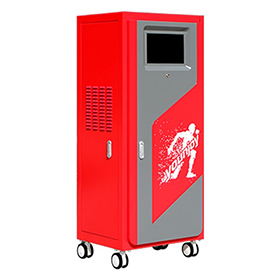
IHHT
IHHT works by alternating between controlled periods of hypoxic and hyperoxic breathing. During the hypoxic phase, the body is exposed to a temporary low-oxygen stimulus, while the hyperoxic phase supports recovery with oxygen-enriched air. Longfian’s IHHT system automates the switching between these phases and can adjust the training process based on SpO₂, heart rate, or preset timing cycles.
IHHT may support aerobic capacity, endurance, exercise recovery, metabolic health, cognitive function, and altitude pre-acclimatization. Studies have reported potential improvements in areas such as VO₂peak, exercise tolerance, blood pressure, glucose regulation, fatigue, and cognitive performance in selected populations. It may also help prepare the body for reduced-oxygen environments before high-altitude travel. Results can vary depending on the training protocol and individual response.
IHHT is mainly used for sports conditioning, altitude preparation, supervised rehabilitation, and wellness programs. Typical users may include athletes, fitness enthusiasts, high-altitude travelers, and selected rehabilitation or wellness clients. Longfian’s IHHT equipment provides adjustable hypoxic and hyperoxic modes to support different training needs.
Safe IHHT sessions rely on individualized oxygen settings and real-time physiological monitoring. Longfian’s IHHT system uses a wireless finger blood oxygen saturation (SpO₂) sensor to monitor blood oxygen saturation and heart rate throughout the session. In addition, the automatic mode switching, pressure control, and multiple safety alarms also help keep the training process within preset limits.
A hypoxia generator is mainly used to produce oxygen-reduced air for simulated-altitude exposure. IHHT, by comparison, combines hypoxic, normoxic, and hyperoxic phases within a structured training and recovery program. The hypoxic phase provides a low-oxygen stimulus, the normoxic phase allows recovery at normal oxygen levels, and the hyperoxic phase provides oxygen-enriched recovery.
In practice, hypoxia generators are commonly used for altitude acclimatization, endurance training, and simulated-altitude environments, while IHHT is better suited to individualized conditioning, supervised rehabilitation, wellness programs, and recovery-focused protocols where oxygen levels need to change automatically during a session.
When choosing IHHT equipment for a medical or wellness clinic, consider the oxygen-control range, monitoring functions, level of automation, safety features, data management, and ease of operation. Longfian’s IHHT system combines automatic hypoxic-hyperoxic switching, wireless blood oxygen saturation (SpO₂) and heart-rate monitoring, three training modes, safety alarms, historical training records, and a 10.1-inch touchscreen, supporting structured clinic-based programs.
Yes. Longfian’s IHHT system uses real-time SpO₂ and heart-rate feedback to support adaptive hypoxic-hyperoxic training. The system can automatically switch between hypoxic and hyperoxic phases and adjust the training process according to SpO₂, heart rate, or preset timing cycles. A wireless finger sensor provides continuous physiological feedback throughout the session.